Istanbul from the water
Istanbul grew up facing the water, and when the bridges are full it is still the way across. The ferries, the Golden Horn, a boat of your own, and the hour each shore is in the light.
The old city of Istanbul has water on three sides: the Golden Horn to the north, the Bosphorus to the east and the Sea of Marmara to the south. The Bosphorus runs for about 30 km from the Black Sea to the Marmara, with Europe on one bank and Asia on the other, and until the first permanent bridge opened in 1973 the only way from one to the other was by boat. At the busy hours the bridges still fill, and the boat is often the quicker crossing.
The ferry is not a tour
The public ferries are how the city gets from one continent to the other. Most people on board are going to work, to school or home, and nobody explains the view. From Karaköy, below Galata, the boat to Kadıköy takes about 20 minutes; from Eminönü, at the foot of the old trading quarter, the boat to Üsküdar takes a little less. Tea comes round in tulip glasses on a tray. Buy a simit on the pier and the gulls will follow the boat for it. Sit outside at the stern, where the deck is open and the city falls away behind you.
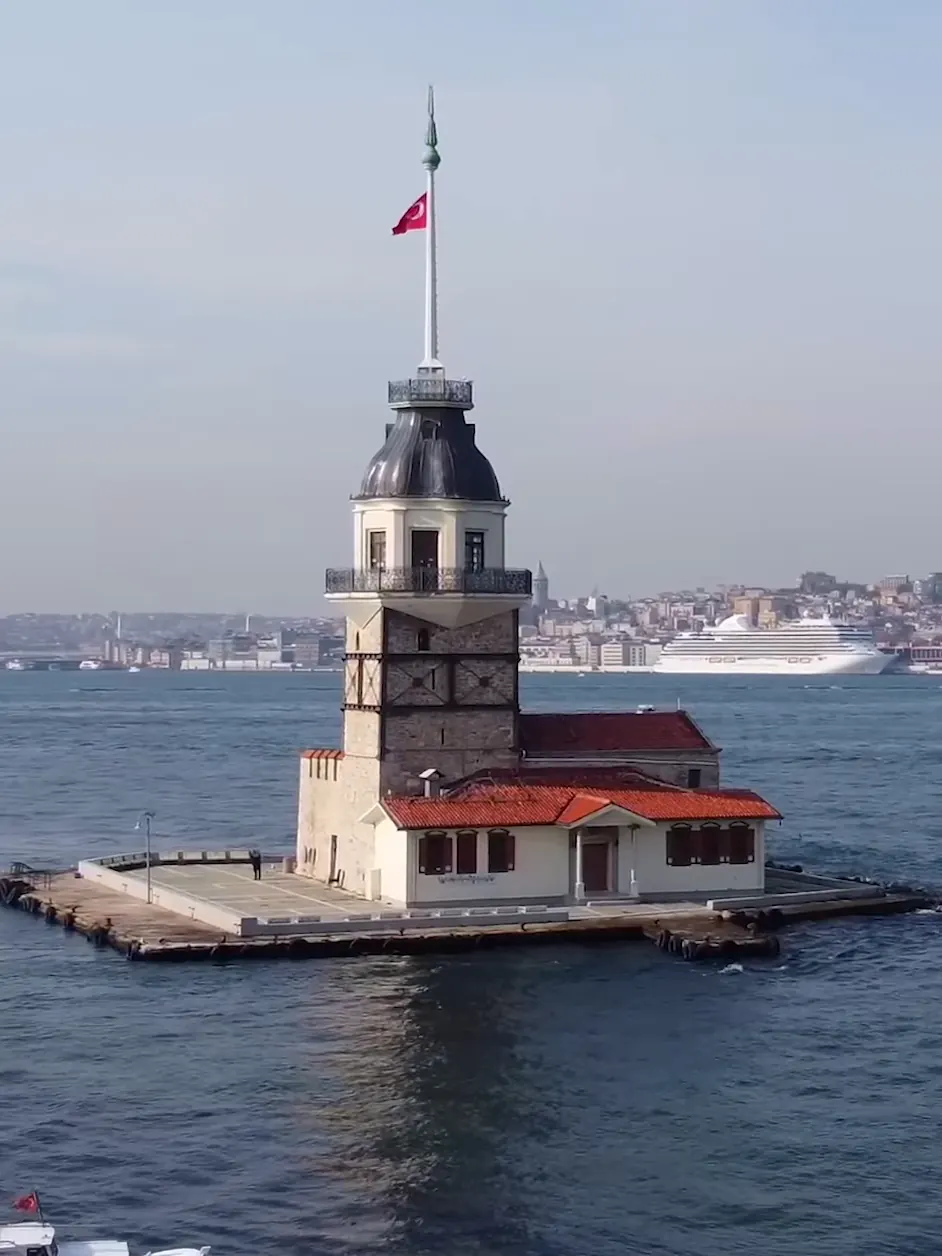
Come back late in the day. The boat from Üsküdar to Eminönü passes the Maiden’s Tower on its rock and comes in towards the old city at dusk, its domes and minarets dark against the sky.
Morning in Europe, evening in Asia
The Bosphorus runs roughly from north-east to south-west, with Europe on its western bank. So the European shore faces east and has the morning light, and the Asian shore faces west and has the evening. Plan the water by it: up the European side early, and the Asian side at the end of the day.
At the narrows the two shores come within a kilometre of each other, and a fortress stands on each. Anadolu Hisarı, on the Asian side, was built for Bayezid I in the 1390s. Rumeli Hisarı, opposite, was built by Mehmed II in 1452, the year before he took the city.
Along both shores stand the yalıs, the old wooden waterside houses. Wood, damp, fire and land prices took most of the early ones: only a handful survive from the 18th century, and more from the 19th. Towards the end of the 19th century, on moonlit summer nights, boats went up the strait in procession and called at the yalıs of both shores. Many are private houses that show the road only a wall and a gate; the boat is still the way to see them.
Two shore villages keep their old scale: Arnavutköy on the European side, with wooden houses of the late 19th and early 20th centuries along the water, and Kuzguncuk on the Asian, where the mosque was built in 1952 in the courtyard of the Armenian church.
Up the Golden Horn
The Golden Horn has its own ferry line. It starts at Üsküdar, calls at Karaköy and runs up the inlet, stopping at Fener and Balat on its way to Eyüp: about 15 minutes from Karaköy to Fener, and about 40 to Eyüp. It runs about once an hour, not every 20 minutes like the crossings, so note the next boat before you walk off.
Fener was a Greek quarter under the Ottomans. The Ecumenical Patriarchate has had its seat at the church of St George here since about 1600, and the red-brick Greek school of the 1880s stands over it on the hill. Along the shore towards Balat is the Bulgarian church of St Stephen, built of cast-iron parts made in Vienna, shipped down the Danube and across the Black Sea, and completed in 1898.
Balat took in Jews from Spain in the late 15th century and was a Jewish quarter for centuries after. Its steep streets of small terraced houses have been painted in bright colours in recent years, and they are no longer quiet.
From Balat it is a walk uphill to the Chora, near the land walls. Reopened as a mosque in 2024, it still shows its early 14th-century mosaics in the two narthexes and the frescoes of its side chapel, among them the Anastasis, Christ raising Adam and Eve from their tombs. Three mosaics in the prayer hall are curtained. Then back down to the water, and on to Eyüp by the same line, for the mosque at the tomb of Abu Ayyub al-Ansari, a companion of the Prophet, and the cemetery that climbs the hill behind it.
When the boat is your own
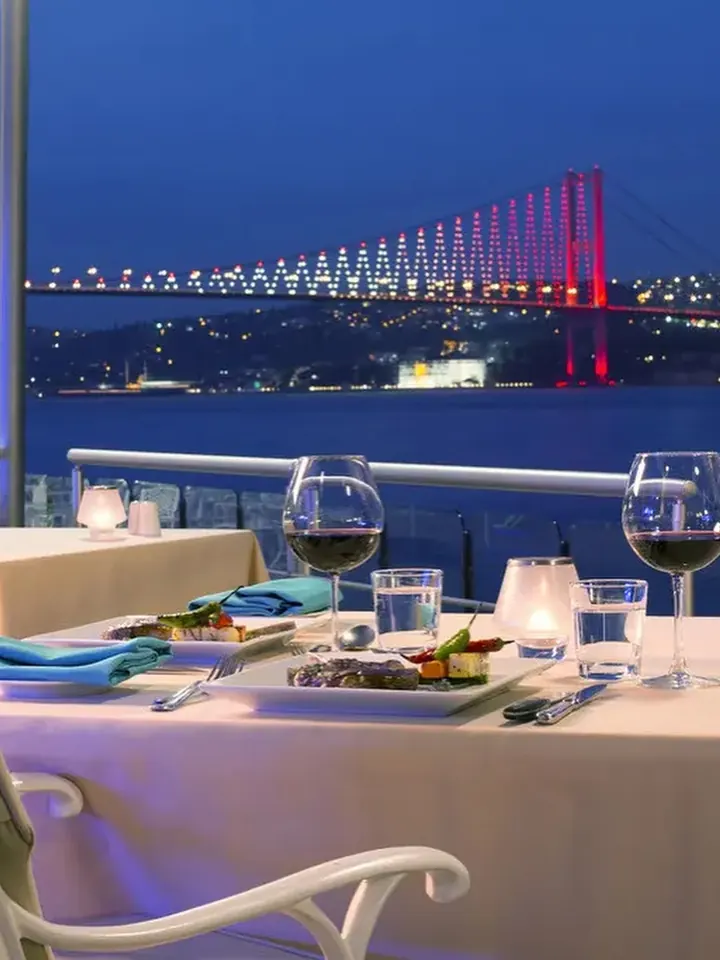
The ferries keep to their routes and their timetable. A boat of your own keeps to the light instead. It is yours for the evening, with its captain, and leaves from a quiet jetty rather than the ferry piers: up the European shore past the yalıs, across to Asia as the light goes, and back under the bridges once they are lit.
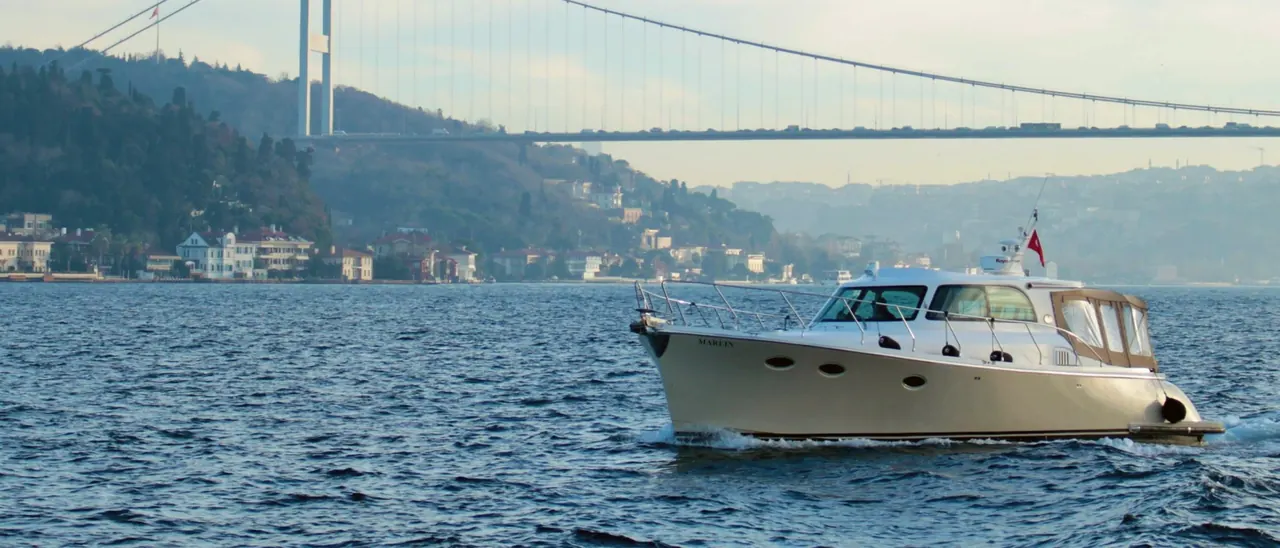
Dinner is on board, or at a table by the water that we hold for you. If you would rather go in the morning, when the water is still and the fishermen are out, the same boat goes then, and the European shore has the sun.
If you go
- When
- April to June, and September to November. The ferries run all year, so a clear winter day will do.
- Getting there
- The ferry piers at Karaköy, Eminönü, Kadıköy and Üsküdar. An Istanbulkart, the city’s transport card, pays the fare.
- How long
- A morning for Fener and Balat, the day if you add the Chora and Eyüp, and an evening for the Bosphorus.
- Worth knowing
- The Chora is closed to visitors on Fridays and for a while around each prayer, and foreign visitors pay to enter.